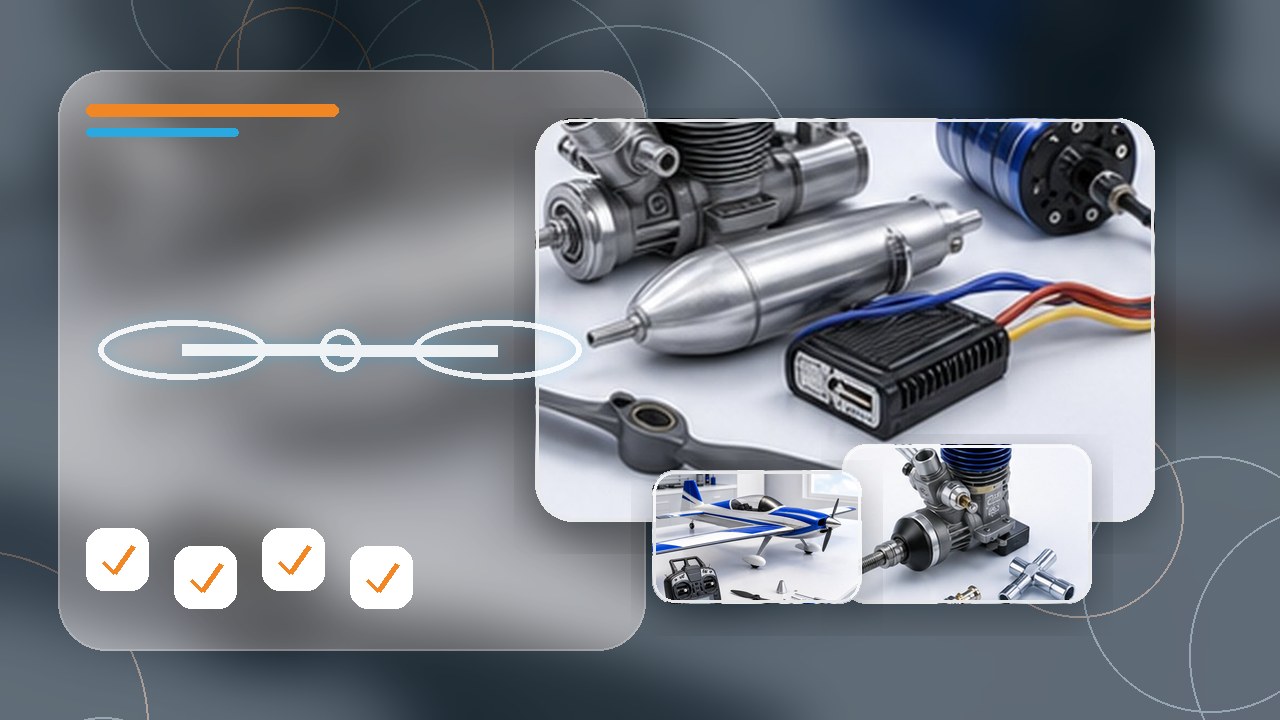
How to choose the right ESC for an RC aircraft
ESC selection by maximum current, voltage, BEC, safety margin, cooling, connector choice and the real load from motor and propeller.
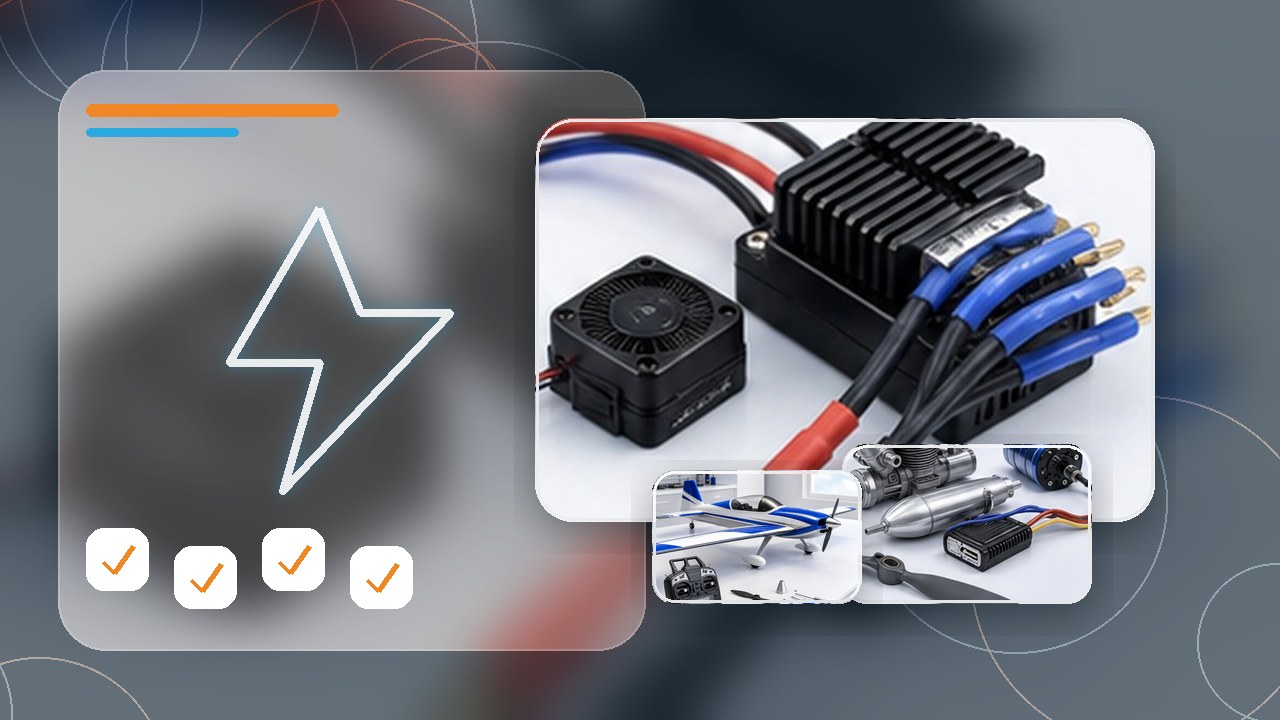
Current rating must include margin
The ESC current rating should be higher than the measured maximum current of the motor and propeller combination. A setup that pulls 48A should not be paired with a 50A ESC and no cooling margin.
Use a safety margin for hot weather, long climbs, battery voltage variation and propeller changes. For demanding aircraft, stronger ESCs often run cooler and more reliably.
Voltage and BEC are separate decisions
The ESC must support the battery cell count, such as 3S, 4S, 6S or higher. The BEC must also supply enough voltage and current for the receiver and all servos.
Large aircraft, many digital servos or high-voltage servos may need a stronger switch-mode BEC, external BEC or separate receiver battery instead of relying on a small built-in BEC.
Cooling and installation protect the electronics
ESC ratings assume airflow. Installing the ESC inside a sealed foam bay or under a battery strap can raise temperature quickly.
Keep wiring short and secure, use connectors rated for the current, avoid loose solder joints and make sure the ESC can shed heat during real flying.
ESC buying checklist
- Measured current is below ESC rating with margin
- ESC voltage rating matches battery cell count
- BEC voltage and current suit receiver and servos
- Cooling airflow planned
- Connector current rating verified
- Programming features match model needs
- Throttle fail-safe can be configured
Common questions
How much ESC margin should I use?
A practical setup leaves meaningful headroom above measured current. The exact margin depends on model type, cooling, flying style and flight duration.
What is BEC in an ESC?
BEC is the circuit that powers the receiver and servos from the main battery in many electric setups. It must be sized for servo load.
Why does an ESC overheat?
Common causes include too much propeller load, poor airflow, weak solder joints, excessive current, incorrect timing or a battery and motor combination outside the ESC rating.
Relevant products from the catalog
Use these links as the practical buying path after reading the guide: aircraft, power system parts, tools and spares that usually complete the setup.