Electric power, LiPo batteries and chargers
A clear guide to motors, ESCs, LiPo cell count, capacity, C rating, connectors, charging and safe storage.
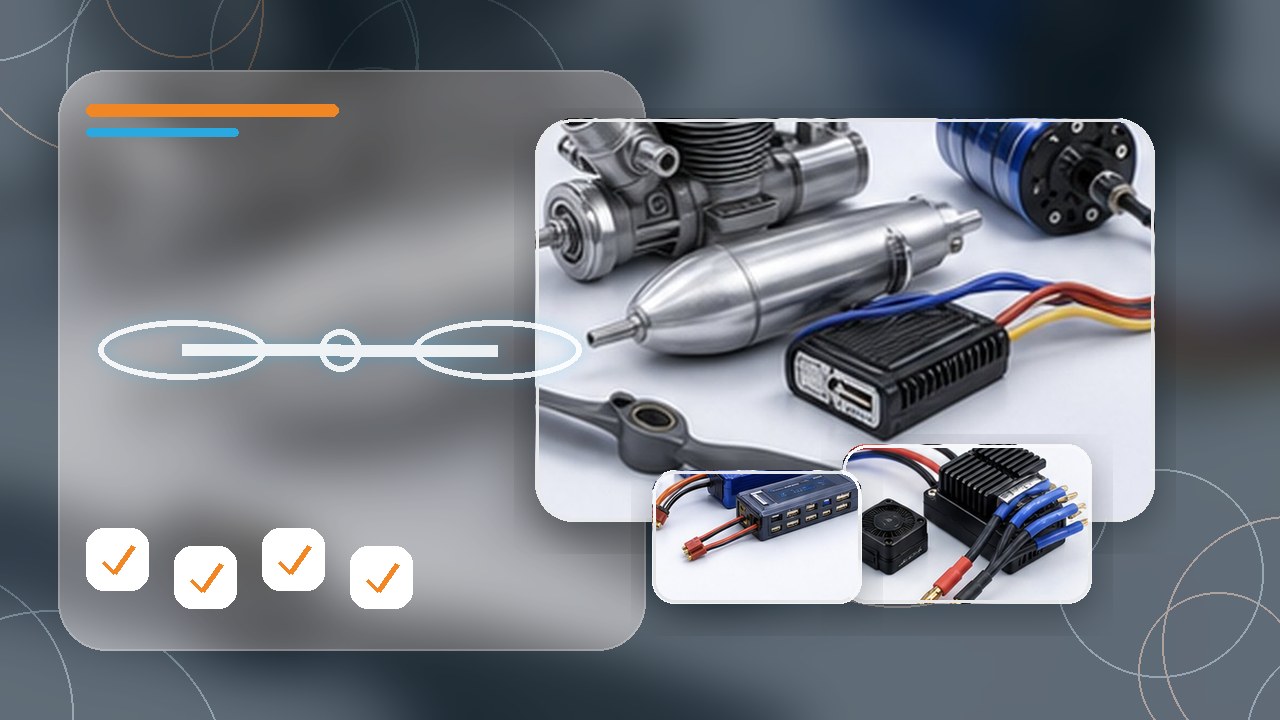
Think in complete power systems
Motor KV, propeller size, battery voltage and ESC current rating are connected. Changing one part can overload another.
Use manufacturer recommendations as a starting point and leave current headroom for heat, prop load and flying style.
Battery numbers have meaning
Cell count affects voltage and power. Capacity affects flight time and weight. C rating indicates discharge ability, but realistic current draw matters more than marketing numbers.
Connector type, battery dimensions and balance plug access should be checked before buying.
Charging is part of the system
A good charger should support the battery chemistry, cell count and charge current you need. Balance charging is essential for LiPo packs.
Store LiPo batteries at storage voltage, inspect for swelling or damage and transport them in a safe container.
Electric setup checklist
- Motor, ESC and battery cell count match
- ESC current rating has headroom
- Propeller range is approved
- Connector type is known
- Charger supports chemistry and cell count
- Storage and safety routine is planned
Common questions
Can I use a bigger propeller for more power?
Only within the motor and ESC recommendation. A larger propeller can raise current sharply and overheat the system.
What does 4S or 6S mean?
It is the number of LiPo cells in series. More cells mean higher voltage, which changes motor RPM and current behavior.
Why use storage charge?
LiPo packs last longer and are safer when stored near storage voltage instead of full or empty.
Relevant products from the catalog
Use these links as the practical buying path after reading the guide: aircraft, power system parts, tools and spares that usually complete the setup.