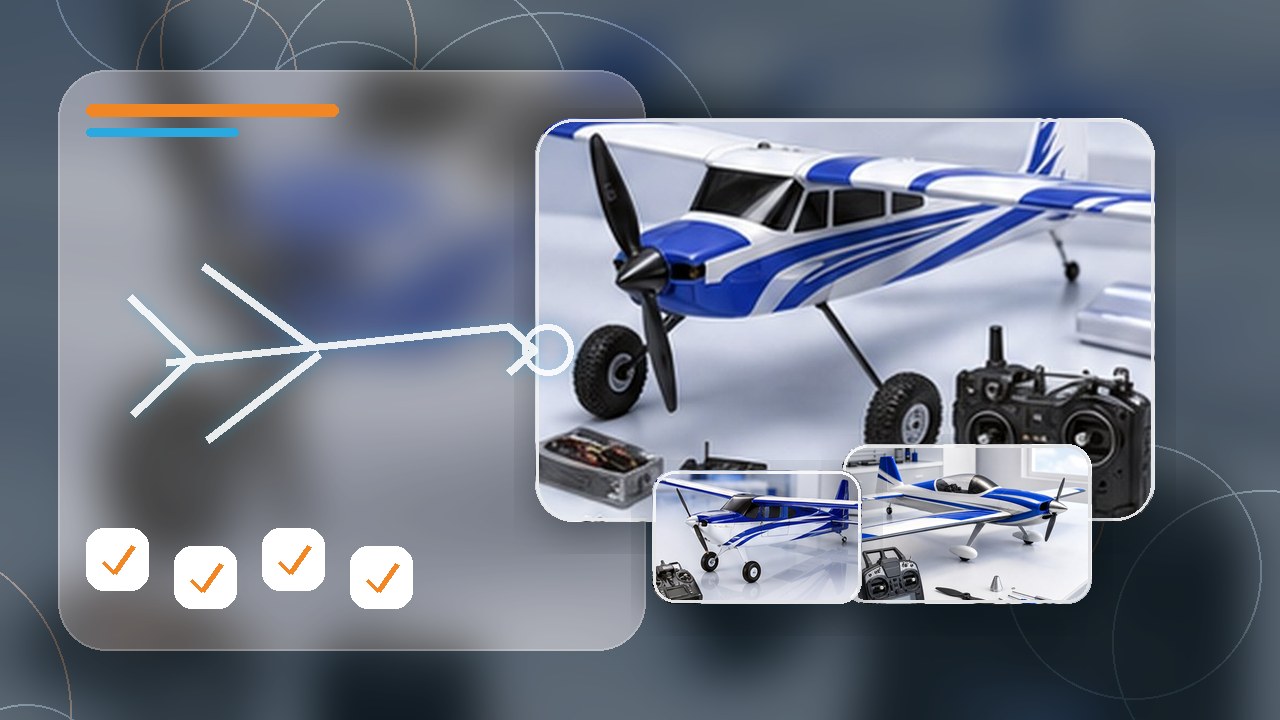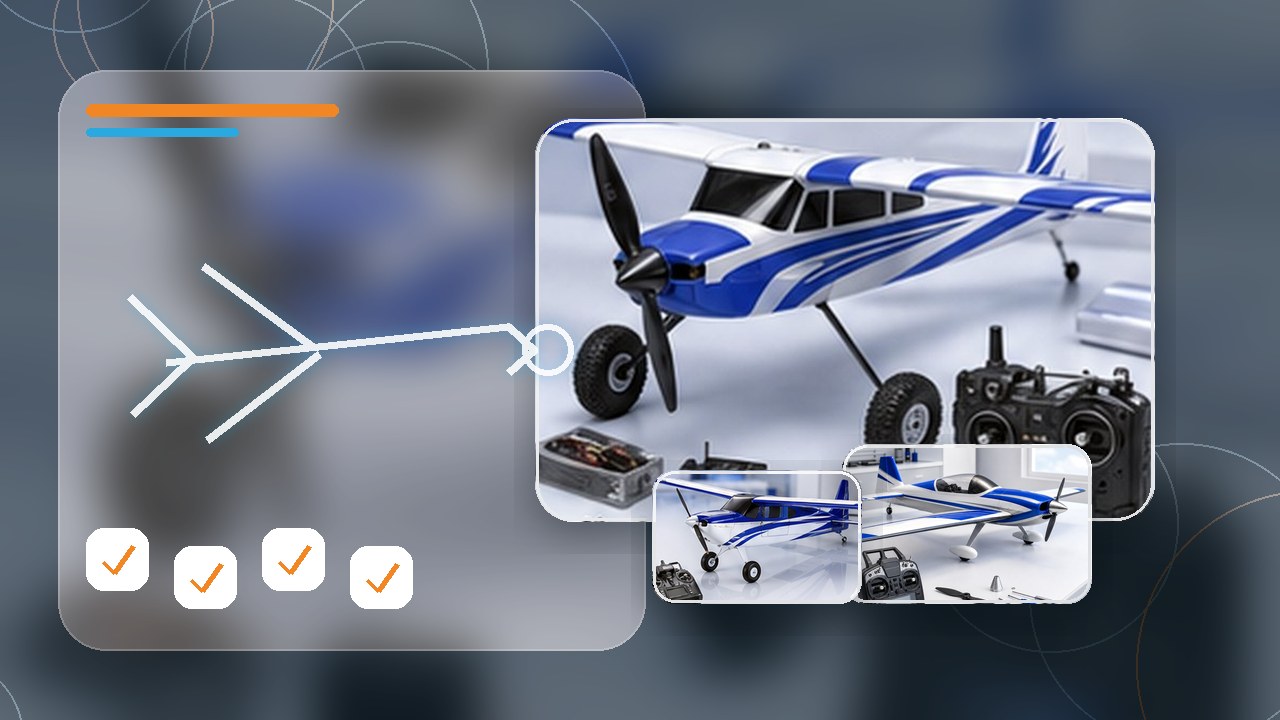
How to take off and land an RC aircraft correctly
Basic takeoff and landing technique with common mistakes: runway alignment, throttle control, flare, approach speed and go-around decisions.
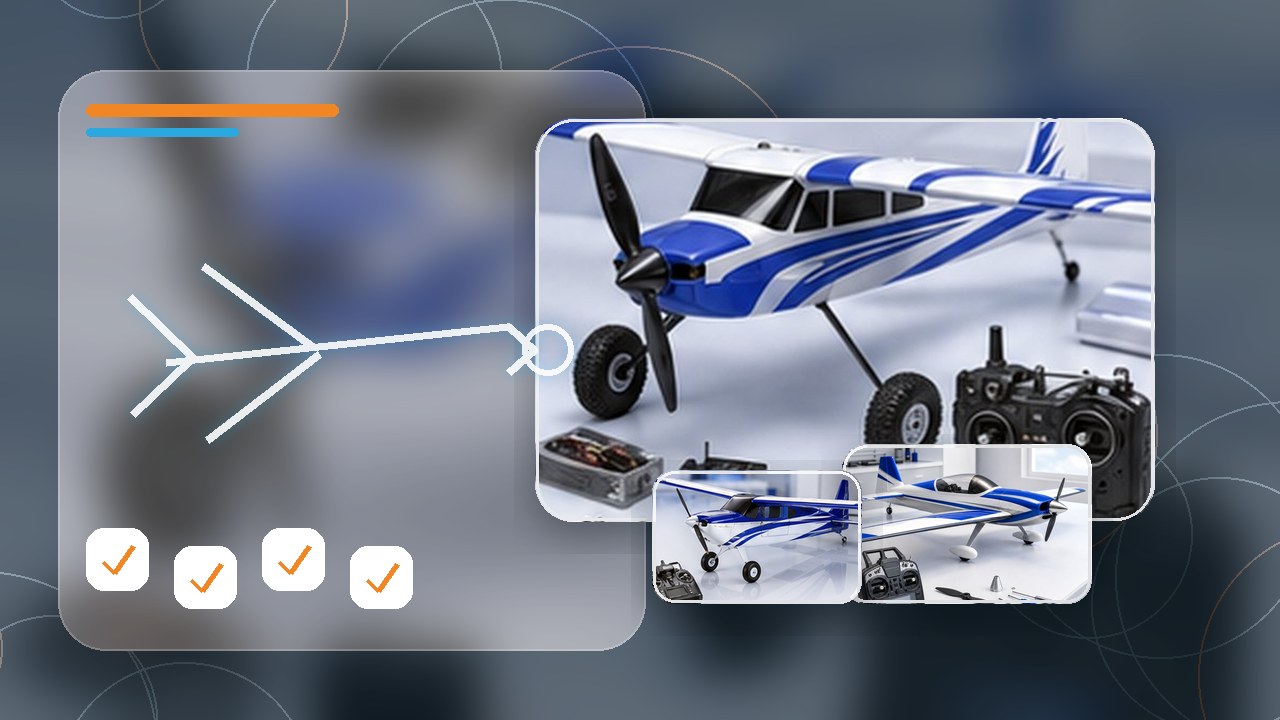
A good takeoff is smooth, not rushed
Line up into the wind, advance throttle smoothly and keep the wings level. Use rudder or steering to stay straight instead of over-correcting with aileron on the ground.
Let the aircraft build enough speed before lifting off. Pulling too early can cause a stall or an unstable climb.
The landing starts before final approach
Plan the circuit, reduce speed gradually and line up with enough distance. A stable approach is easier than trying to rescue a steep, fast or crooked final.
Keep a little power as needed, hold attitude and flare gently near the ground. Do not dive at the runway and then pull hard at the last moment.
Go-around is a normal decision
If the approach is too high, too fast, too slow, misaligned or drifting badly, add power smoothly and go around. A second approach is cheaper than forcing a bad landing.
Common mistakes include turning too low, landing downwind, cutting power too early and staring at the runway instead of watching aircraft attitude.
Takeoff and landing checklist
- Wind direction identified
- Runway or landing area clear
- Low rates selected when appropriate
- Smooth throttle used
- Climb kept shallow and controlled
- Approach planned early
- Airspeed maintained
- Flare kept gentle
- Go-around used when approach is unstable
Common questions
Should I always take off into the wind?
Yes when possible. Taking off into the wind reduces ground speed and usually gives better control margin.
What is a flare?
Flare is the gentle nose-up transition near the ground that reduces descent rate before touchdown.
When should I go around?
Go around whenever the approach is unstable, too fast, too slow, too high, too low or not aligned.
Relevant products from the catalog
Use these links as the practical buying path after reading the guide: aircraft, power system parts, tools and spares that usually complete the setup.