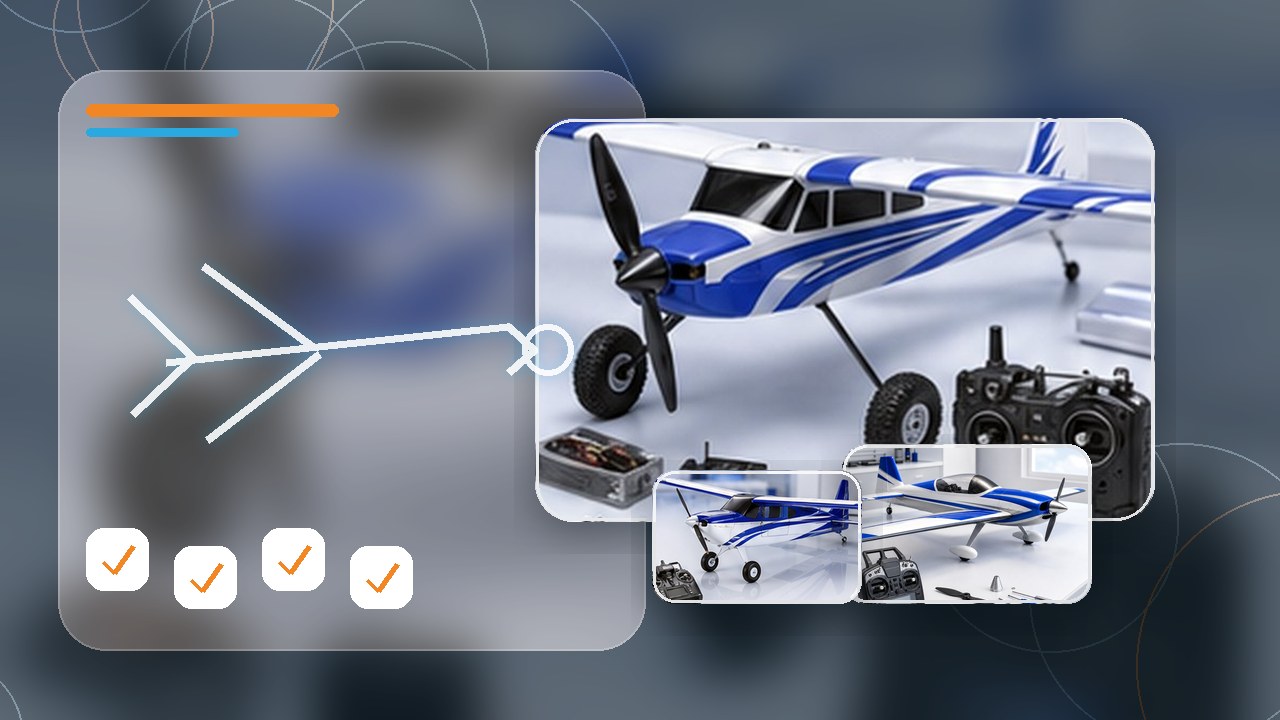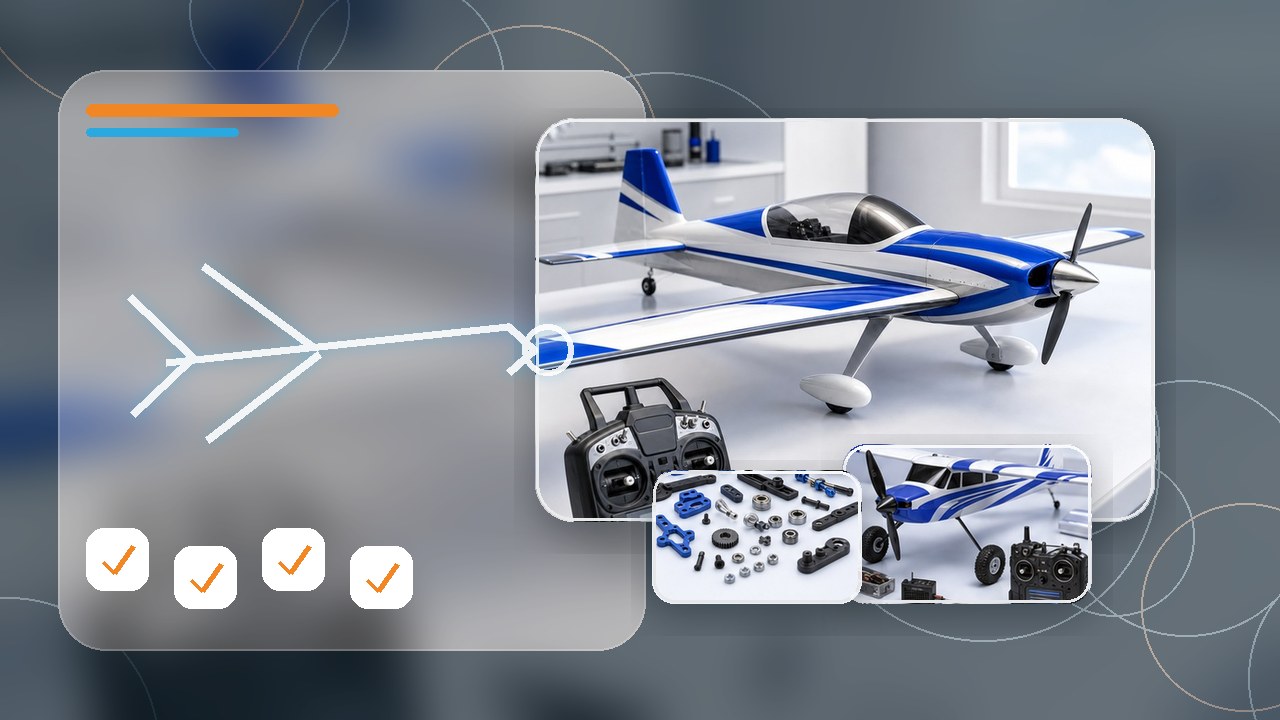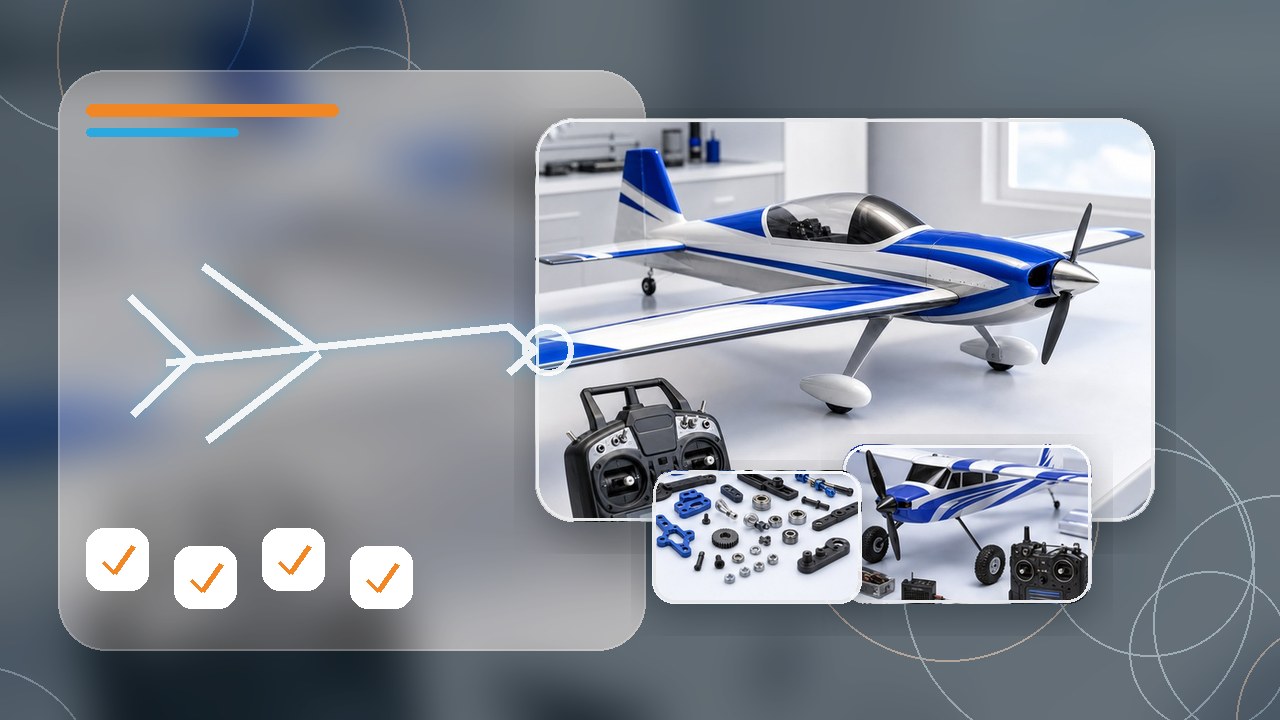
What equipment do you need to start flying RC aircraft?
The complete starter list: aircraft, transmitter, receiver, batteries, charger, servos, adhesives, tools, voltage meter and field essentials.
Core flight equipment
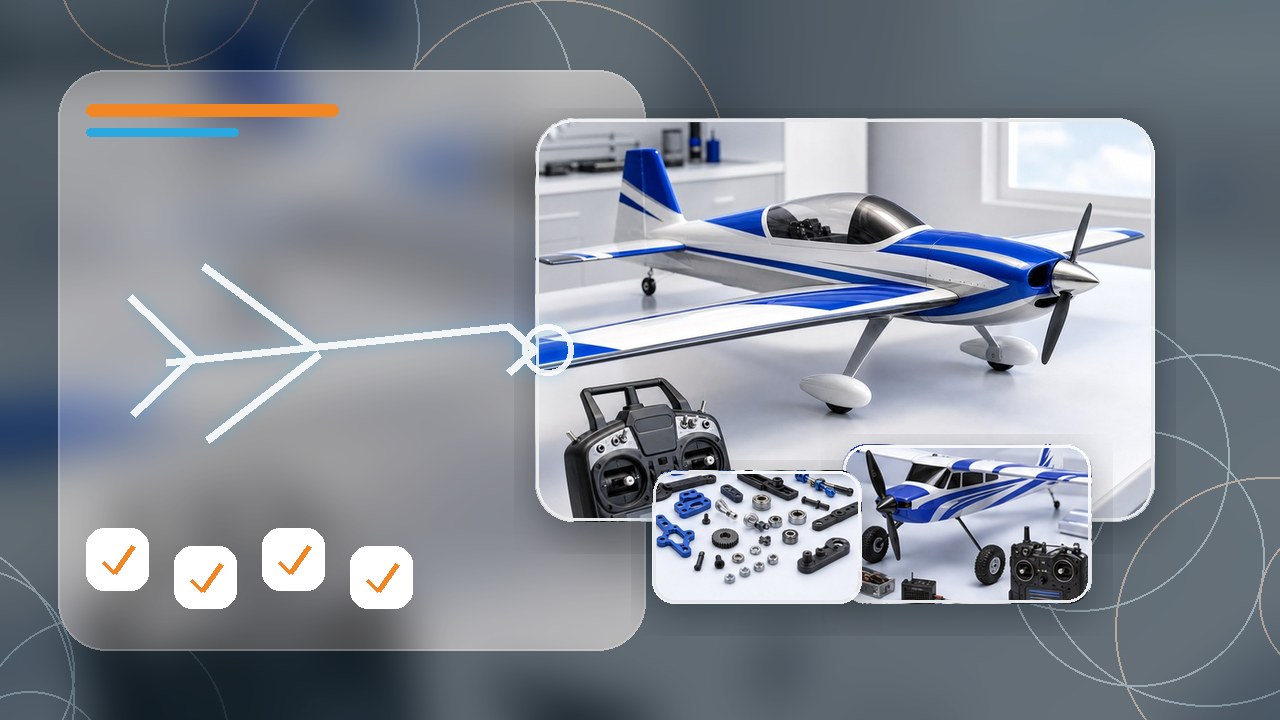
At minimum you need the aircraft, transmitter, receiver, servos where not included, a suitable battery, charger and the correct propeller or power setup. If one of these parts is mismatched, the aircraft may not be safe or practical.
For electric models, the ESC, motor, battery cell count, connector and charger must all work together. For fuel models, add starter equipment, fuel system items and engine support tools.
Workshop and setup tools
Basic tools include screwdrivers, hex drivers, pliers, hobby knife, thread locker, tape, CA or epoxy, spare screws, zip ties and a battery checker or voltage meter.
Tools are not optional extras. They are what let you correct small issues before they become broken parts or unsafe flights.
Field essentials
Bring spare propellers, charged batteries, a safe LiPo bag or storage box, a field charger if needed, cleaning cloth, small repair glue and the model manual or setup notes.
A prepared field box reduces service questions and helps the customer fly more confidently after purchase.
Starter equipment checklist
- Aircraft matched to pilot level
- Transmitter and receiver
- Servos if not included
- Battery and charger
- Correct connectors and adapters
- Adhesives and thread locker
- Voltage meter or battery checker
- Spare propellers and basic tools
Common questions
Should I buy tools before the aircraft?
Buy tools together with the first model. Even simple models need setup, inspection and small adjustments.
Do I need a voltage meter?
Yes. Checking battery and receiver voltage is one of the simplest ways to prevent avoidable failures.
What spare part should every beginner buy?
Spare propellers are the most common first spare for aircraft. For some models, landing gear parts and glue are also smart.
Relevant products from the catalog
Use these links as the practical buying path after reading the guide: aircraft, power system parts, tools and spares that usually complete the setup.