Servo selection: torque, speed, gears and voltage
How to select servos for trainers, sport aircraft, large models, cars and boats without under-sizing a control surface.
Torque needs margin
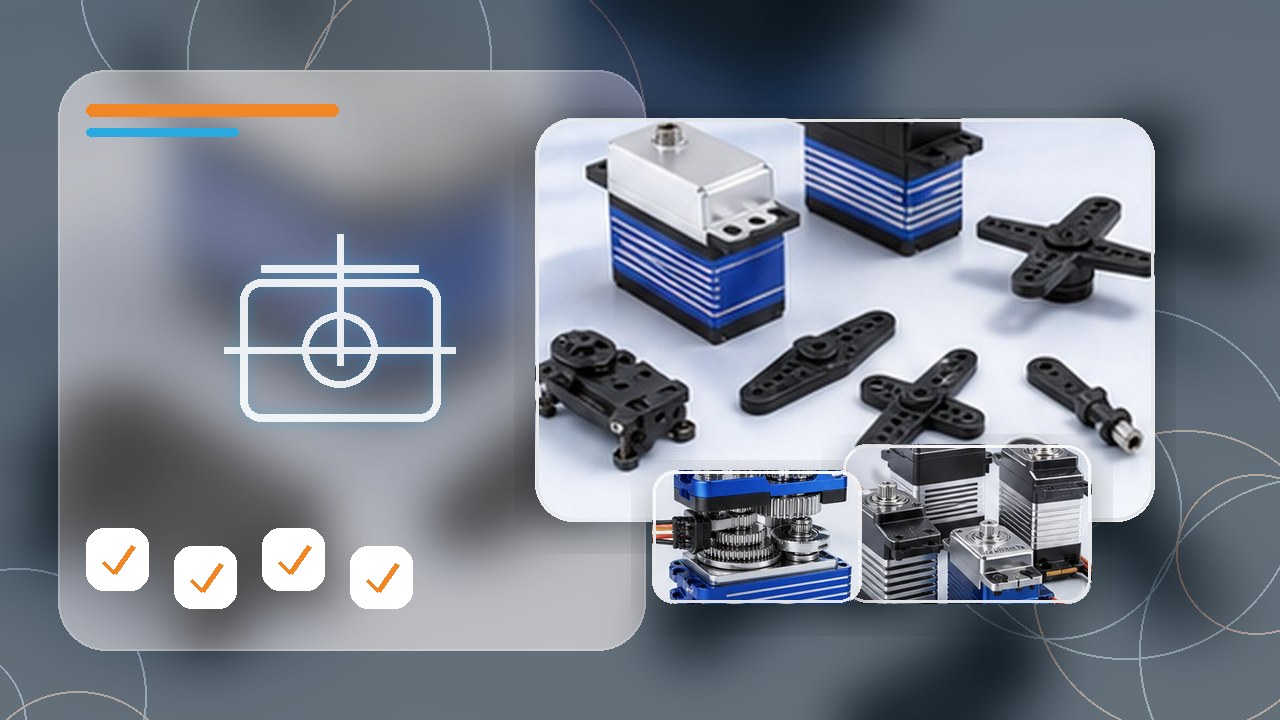
Servo torque should be chosen by aircraft size, control surface area, speed and linkage geometry. A servo that is just barely enough on the bench may be weak in the air.
Large surfaces, 3D flying, high-speed aircraft and heavy steering loads need stronger servos with better gears and stable power.
Speed, size and gear type change the result
Servo speed matters on aerobatic aircraft, helicopters and fast models, while torque and centering may matter more on trainers, gliders and scale aircraft. Physical size must match the servo bay, mounting tabs and linkage geometry.
Metal gear servos handle shock and load better than many plastic gear servos. Digital servos usually hold center more strongly and respond faster than analog servos, but they can draw more current, so the BEC or receiver battery must be sized for the load.
Voltage changes performance
HV servos can deliver more torque and speed when powered correctly, but they must be used with a receiver and power system that support the voltage.
Do not assume every receiver, switch or BEC is safe for every servo voltage. Check the full path.
Fit and hardware matter
Confirm physical size, mounting tabs, spline count and horn style. A strong servo with the wrong horn or poor linkage will not perform as expected.
For critical surfaces, avoid flexible linkages and use quality arms, ball links and secure fasteners.
Servo matching checklist
- Torque margin suits model size and speed
- Servo speed suits the flying style
- Voltage range matches BEC or receiver pack
- Metal gear or plastic gear chosen by load
- Digital or analog type chosen by control need
- Case size fits the model
- Spline and horn compatibility verified
- Power supply can handle peak current
Common questions
Are digital servos always better?
Digital servos usually hold position better and respond faster, but they can draw more current. The power system must be sized accordingly.
Metal gears or plastic gears?
Metal gears handle higher loads and impacts better. Plastic gears can be light and precise for smaller low-load uses.
What causes servo jitter?
Common causes include weak power, poor linkage, receiver noise, damaged gears or incorrect signal compatibility.
Relevant products from the catalog
Use these links as the practical buying path after reading the guide: aircraft, power system parts, tools and spares that usually complete the setup.