Radio systems and receivers: choosing a reliable control link
Channels, receiver protocols, telemetry, range, redundancy and what to check before matching a transmitter to a model.
Count real functions, not only surfaces
A basic aircraft may need four channels, but flaps, retracts, ignition kill, lights, gyro modes and telemetry can raise the requirement quickly.
Choose a transmitter with enough model memory, mixes and channel flexibility so it can serve more than one aircraft.
Choose the transmitter, receiver and protocol together
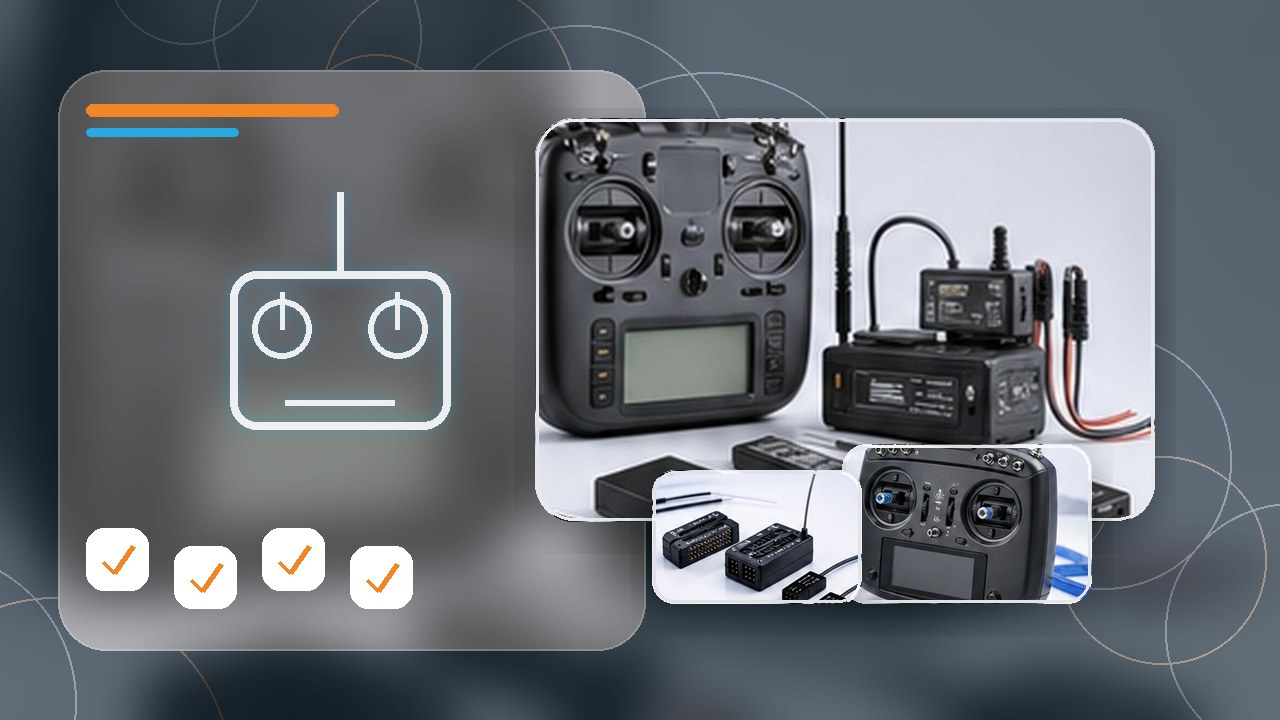
The transmitter is the pilot interface, but the receiver and protocol decide what can actually work inside the model. Check the exact protocol family, receiver channel count, telemetry support, antenna style and voltage range before buying.
For small foam models, a compact receiver may be enough. For larger aircraft, gliders, gas models or expensive scale projects, range, antenna diversity, telemetry and receiver power reliability become much more important.
Protocol compatibility is critical
Transmitters and receivers must speak the same protocol. Brand names alone are not enough, because many brands have multiple generations and receiver families.
Before buying, verify protocol, receiver voltage range, antenna layout and whether the receiver supports telemetry or stabilization if needed.
Reliability comes from installation too
Even a strong radio system can suffer from poor antenna placement, weak power supply or vibration. Keep antennas away from carbon, metal, ignition systems and high-current wiring.
For larger models, consider redundant receiver power, telemetry voltage alerts and proper fail-safe setup.
Radio setup checklist
- Enough channels for all functions
- Receiver protocol matches transmitter
- Range and antenna diversity suit the model
- Receiver voltage range suits the power system
- Telemetry needs defined
- Antenna installation path planned
- Fail-safe can be configured clearly
Common questions
How many channels do I need?
Count every controlled function, then add room for future use. Six channels is a practical minimum for many sport aircraft, while advanced models often need more.
Is telemetry necessary?
Not always, but telemetry for receiver voltage, battery voltage or engine temperature can prevent avoidable failures.
Can I mix transmitter and receiver brands?
Only when the protocol is explicitly compatible. Always confirm the exact receiver family before buying.
Relevant products from the catalog
Use these links as the practical buying path after reading the guide: aircraft, power system parts, tools and spares that usually complete the setup.