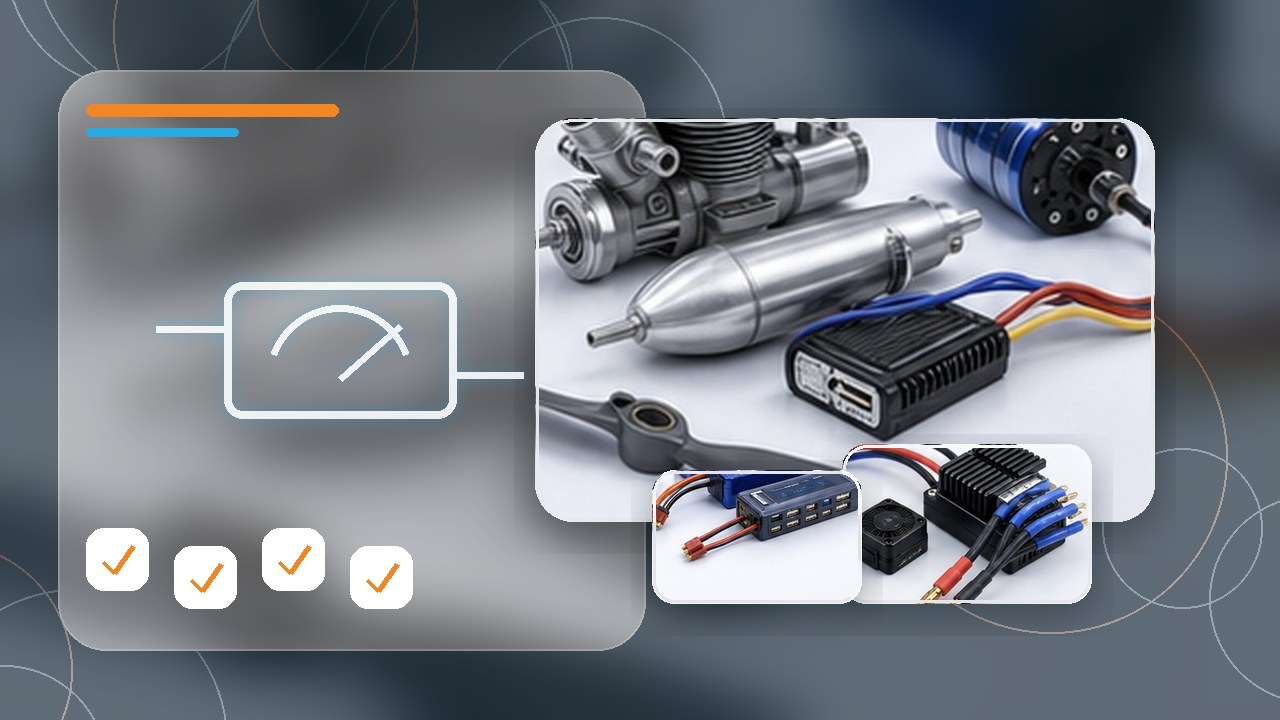
Internal BEC vs external UBEC: which should you use?
A guide to receiver and servo power: internal ESC BEC, external UBEC, receiver battery, redundancy and large aircraft safety decisions.
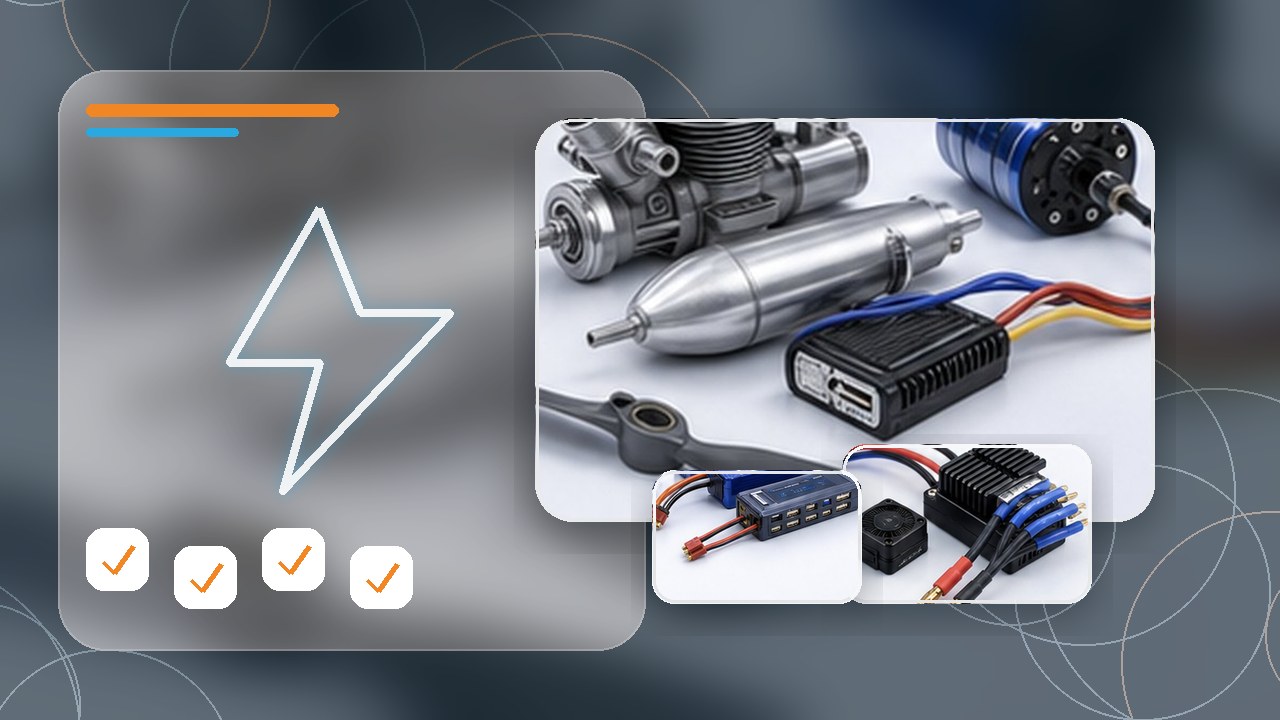
BEC powers the radio system
The BEC supplies regulated voltage to the receiver and servos. In many electric aircraft it is built into the ESC, which is convenient and clean for simple models.
The risk appears when servo count, servo current, voltage needs or model value increase. A weak BEC can cause receiver voltage drops, servo issues or brownouts.
External UBEC gives more control
An external UBEC or SBEC can provide higher current capacity, better cooling and a chosen output voltage. This is useful when the ESC BEC is too small or when the ESC is under heavy heat load.
Large aircraft may need a receiver battery, dual batteries, power distribution, PowerBox-style redundancy or telemetry voltage alerts instead of relying on one small built-in regulator.
Choose by servo demand
Count servos, servo type, voltage, expected load and whether several servos can move together. Digital, HV and high-torque servos can draw much more current than basic analog servos.
If receiver voltage drops during control movement, solve the power problem before flying. Radio power is not an optional upgrade; it is the control system.
BEC choice quick table
Use this to decide when the built-in ESC BEC is enough and when a stronger power plan is smarter.
| Setup | Good fit | Main advantage | Main caution |
|---|---|---|---|
| Internal ESC BEC | Small trainers, gliders and simple sport models | Simple wiring and low part count | Limited current and heat sharing with ESC |
| External UBEC / SBEC | More servos, digital servos or higher current demand | Stronger regulated receiver power | Must be wired correctly and rated for input voltage |
| Receiver battery | Fuel models and some larger electric models | Separates radio power from drive battery | Needs charging, switching and monitoring |
| Power distribution / redundancy | Giant Scale and expensive multi-servo aircraft | Reduces single-point power risk | Requires careful setup and space |
Receiver power checklist
- Count all servos and functions
- Check servo voltage and current demand
- Check ESC BEC rating
- Consider heat and airflow around ESC
- Measure receiver voltage under servo load
- Use external UBEC or receiver battery where needed
- Set telemetry voltage alerts on larger models
Common questions
Is the ESC BEC enough for every electric aircraft?
No. It can be enough for simple models, but larger aircraft, many servos or high-current digital servos may need stronger receiver power.
What is a brownout?
A brownout happens when receiver voltage drops too low and the receiver resets or behaves unpredictably. Servo load and weak power supply are common causes.
Can I use HV servos with any BEC?
No. The BEC, receiver and servos must all support the selected voltage. Check the complete power path.
Relevant products from the catalog
Use these links as the practical buying path after reading the guide: aircraft, power system parts, tools and spares that usually complete the setup.