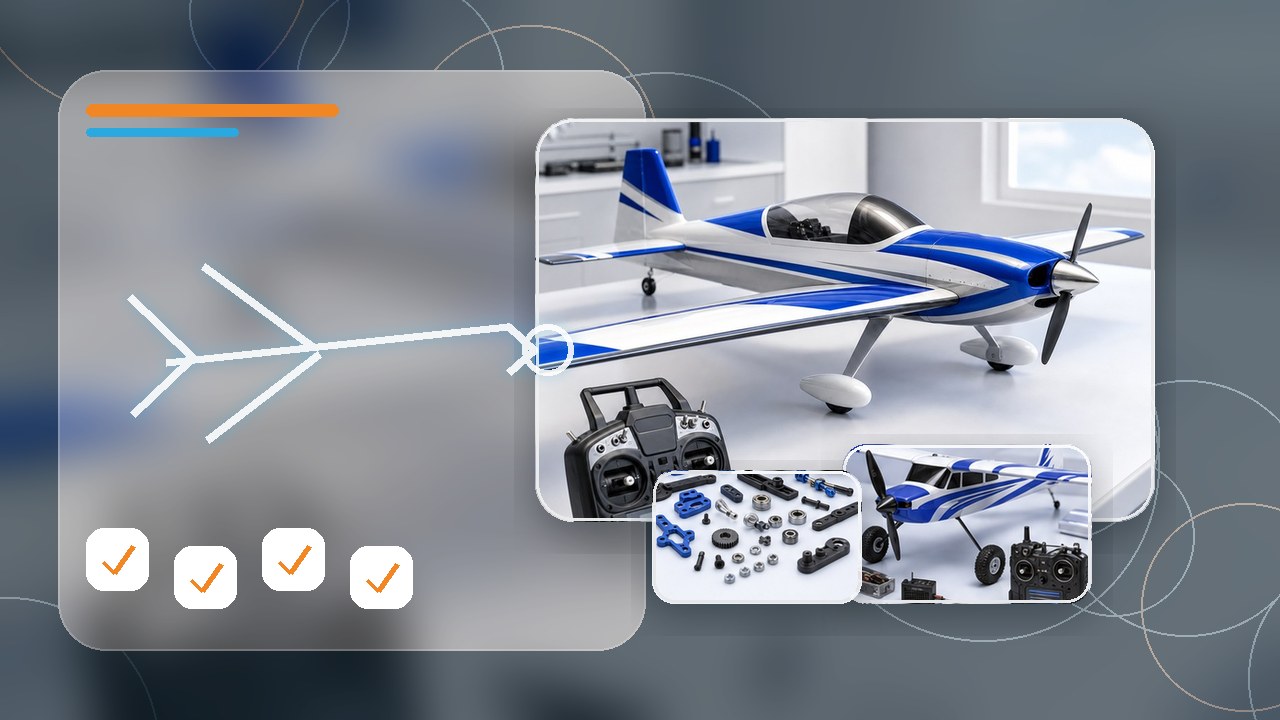
How to choose your first RC aircraft
A practical path for new pilots: Trainer, Glider, Warbird, 3D, EDF Jet, ARF, PNP, RTF, power system, radio gear and what to verify before buying.
Start with the mission, not the catalog photo
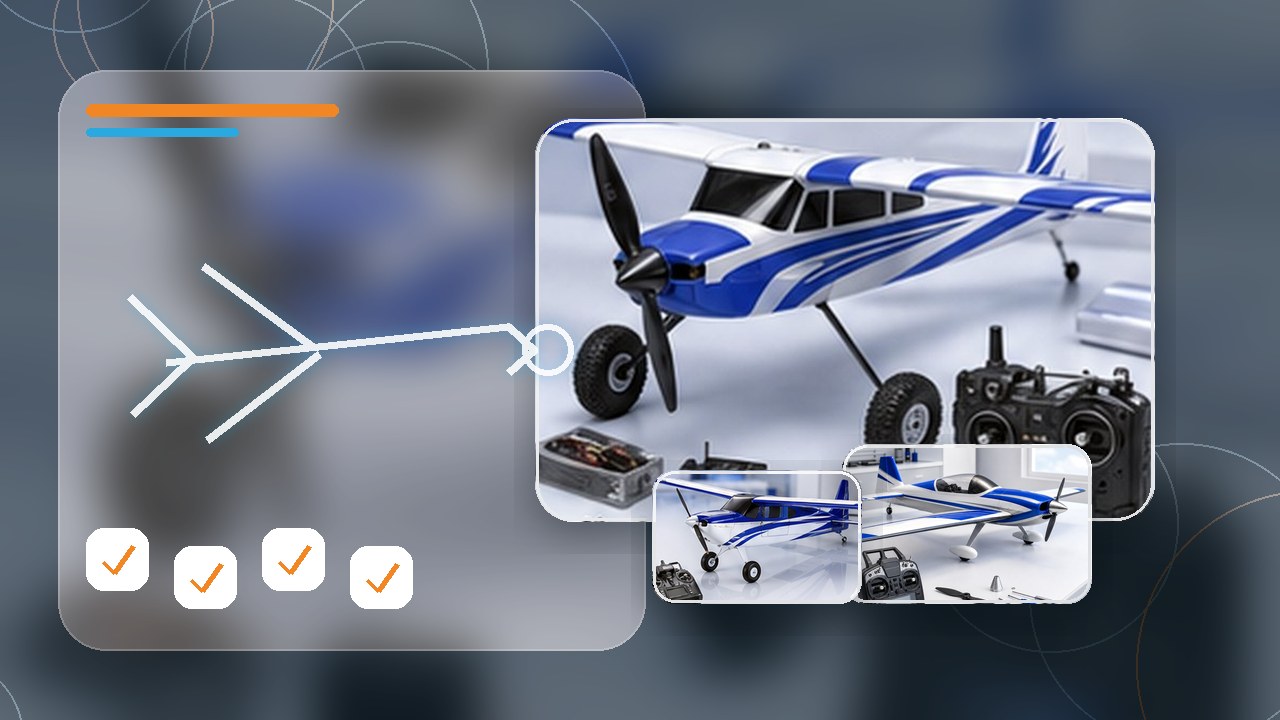
A good first aircraft is predictable, repairable and easy to see in the air. High-wing trainers, stable sport models and electric foam aircraft are usually easier for a new pilot than fast scale models.
Before choosing, define where you will fly, how much space you have, whether you have help from an experienced pilot and how often you expect to fly.
Aircraft types: what each style really means
A Trainer is built to be stable and forgiving, so it is usually the safest first choice. A Glider teaches smooth control and energy management, but needs suitable space and weather. A Warbird looks exciting, yet it is normally faster, heavier and less forgiving.
A 3D aircraft is designed for extreme aerobatics and large control throws, not for first flights. An EDF Jet looks impressive but flies fast, needs more runway planning and gives less time to correct mistakes. For a first purchase, choose calm handling before scale looks or speed.
Package terms matter too: RTF usually includes almost everything, BNF binds to a compatible transmitter, PNP includes the main electronics but usually needs radio gear and battery, ARF needs more assembly and electronics choices, and KIT is a building project for people who want to assemble the airframe themselves.
Buy the aircraft as a complete system
The model, motor, ESC, battery, propeller, charger, transmitter, receiver and servos must fit each other. A beautiful aircraft with the wrong battery or underpowered servos becomes frustrating quickly.
Check wingspan, flying weight, recommended motor size, battery cell count, propeller range, servo size and connector types before placing an order.
Plan for the first month
The first month usually needs more than the aircraft itself: spare propellers, a field battery checker, glue, basic tools and sometimes landing gear parts.
Choosing a model with available spares is often smarter than choosing the most impressive looking model.
First aircraft buying checklist
- Stable trainer or forgiving sport model
- Avoid EDF Jet, Warbird and 3D aircraft for a first solo model
- Understand whether the model is RTF, BNF, PNP, ARF or KIT
- Recommended motor and propeller range confirmed
- Battery and charger match the setup
- Receiver compatible with your transmitter
- Servos match size and torque needs
- Spare propellers and repair glue available
Common questions
Should a first RC aircraft be electric or fuel powered?
Electric is usually simpler for a first model because setup, transport and maintenance are easier. Fuel models can be excellent, but they require more tuning and field equipment.
Is a scale aircraft good for beginners?
Most scale models are less forgiving than trainers. Start with stability and parts availability, then move to scale once takeoffs, landings and orientation are consistent.
What is the most common beginner mistake?
Buying an aircraft without checking the complete electronics and spare parts path. Compatibility matters more than one attractive product page.
Relevant products from the catalog
Use these links as the practical buying path after reading the guide: aircraft, power system parts, tools and spares that usually complete the setup.