Engines and propellers: matching thrust, RPM and reliability
How to think about glow, gas and electric propellers, engine size, thrust needs, balancing and safe operation.
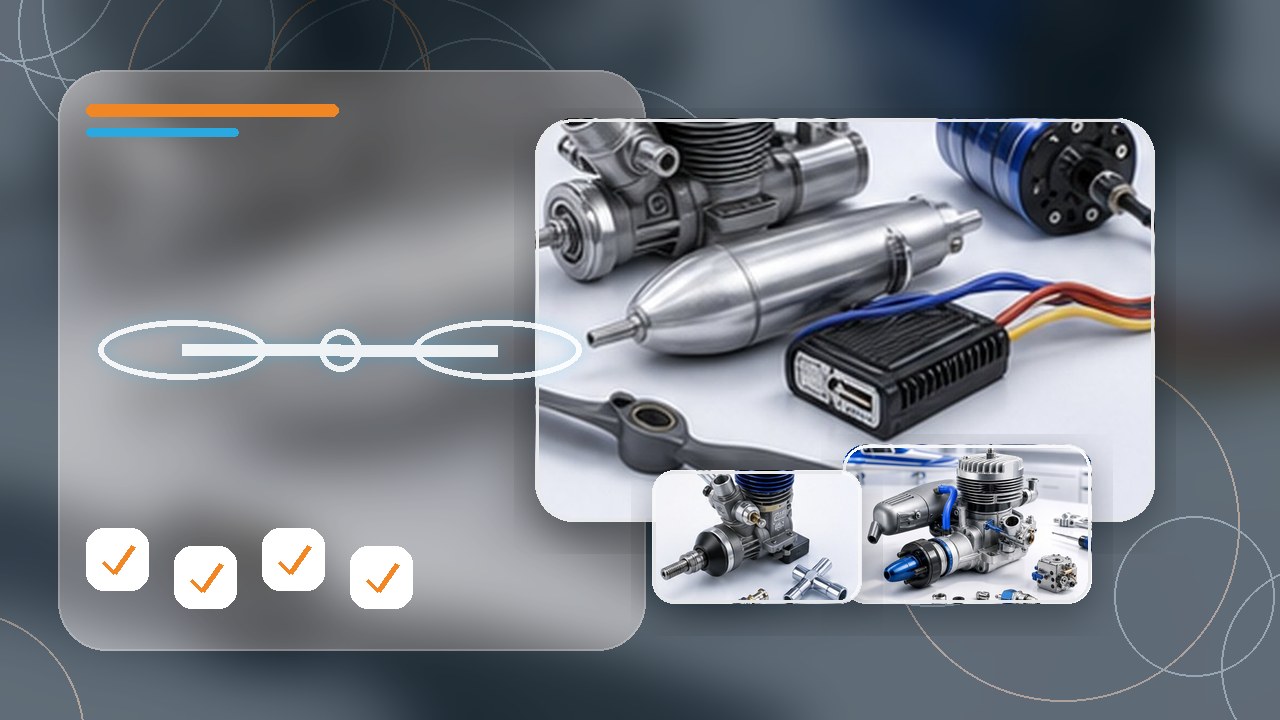
Propeller size controls engine load
Diameter and pitch affect RPM, thrust and current or fuel load. Too much propeller can overheat an electric setup or overload a fuel engine.
Start inside the engine or motor recommendation and adjust only after checking RPM, temperature and flight behavior.
Balance reduces vibration
An unbalanced propeller can damage bearings, loosen fasteners, affect sensors and make tuning harder.
Balance propellers before use, check spinner fit and inspect for cracks, dents or delamination after every impact.
Reliability is installation work
Cooling airflow, secure fuel lines, throttle linkage, ignition placement and firewall strength all matter.
For gas engines, keep ignition components away from receiver wiring and confirm a reliable kill switch.
Engine and propeller checklist
- Approved propeller range checked
- Propeller balanced before use
- Spinner and hub fit verified
- Cooling path clear
- Fuel or electric connectors secured
- Kill switch or throttle fail-safe tested
Common questions
What does propeller pitch do?
Pitch affects theoretical forward travel per rotation. Higher pitch can increase speed demand but also raises load.
Are wooden propellers only for gas engines?
No. Many wooden propellers are available for gas and electric use, but the exact propeller must match the power system.
When should I replace a propeller?
Replace it after cracks, deep nicks, delamination, hard ground strikes or any damage near the hub.
Relevant products from the catalog
Use these links as the practical buying path after reading the guide: aircraft, power system parts, tools and spares that usually complete the setup.