Electric gliders and sailplanes: choosing the right RC setup
A customer-focused guide to wingspan, wing loading, climb power, folding propellers, batteries, servos, flaps and landing space.
Gliders reward smooth flying
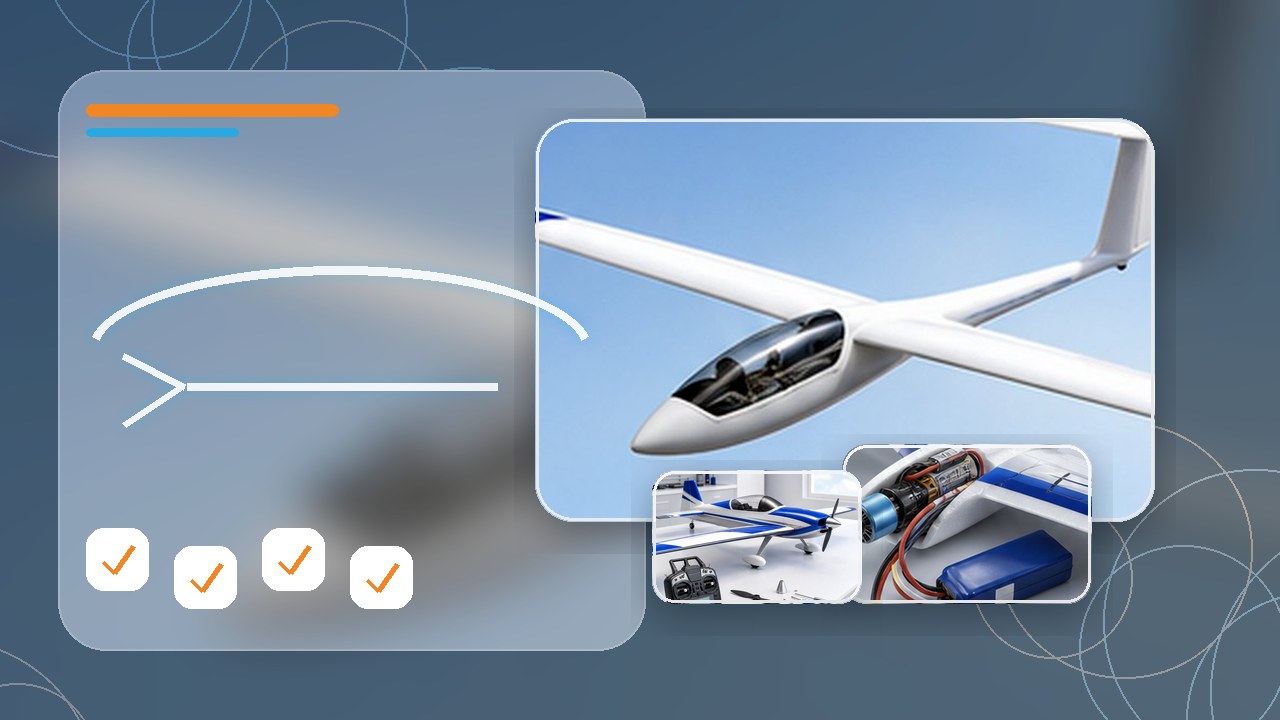
Electric gliders teach energy management, coordinated turns and precise landing approaches. They can be gentle for beginners, but long wings and light structures still need careful handling.
Choose wingspan by flying site, storage and transport. A larger glider can float better and carry more equipment, but it needs more room on the ground and more care in wind.
Power is for climbing, not only speed
Most electric sailplanes use the motor to climb efficiently, then glide with the motor off. Motor KV, ESC current, battery cell count and folding propeller size should be chosen for reliable climb without unnecessary heat.
A folding propeller reduces drag when the motor is off. It should fit the spinner, motor shaft, fuselage clearance and expected current draw.
Weight and CG are critical
Battery size affects both flight time and balance. A heavy battery can improve climb time but hurt sink rate, landing speed and thermal performance.
Glider customers should check battery tray size, CG range, wing servo type, connector style and whether the model uses ailerons, flaps, spoilers or crow braking.
Radio features can make the model easier
Flight modes, camber, reflex, motor safety, telemetry and landing mixes are especially useful on gliders. They turn one aircraft into a climb, cruise, thermal and landing platform.
For advanced sailplanes, choose servos with good centering, thin wing fit and enough torque for full-span control surfaces.
Electric glider checklist
- Wingspan suits storage, transport and field
- Climb power and folding propeller matched
- Battery weight supports correct CG
- Wing servos fit the airframe
- Ailerons, flaps or spoilers understood
- Radio has needed mixes and flight modes
- Landing space and wind limits considered
- Spare prop blades and spinner parts selected
Common questions
Is an electric glider good for a beginner?
A stable powered glider can be excellent with guidance, especially for pilots who want slower flying and longer practice time.
Why use a folding propeller?
A folding propeller reduces drag when the motor is off, which improves glide performance and makes the aircraft feel cleaner in the air.
Should I choose the biggest battery that fits?
Not automatically. Battery weight changes CG, sink rate and landing speed. Choose a pack that balances correctly and supplies the needed climb time.
Relevant products from the catalog
Use these links as the practical buying path after reading the guide: aircraft, power system parts, tools and spares that usually complete the setup.