How to set Dual Rates and Expo on an RC transmitter
Make an aircraft calmer for beginners by setting low rates, high rates and expo without hiding mechanical setup problems.
Start with mechanical throw first
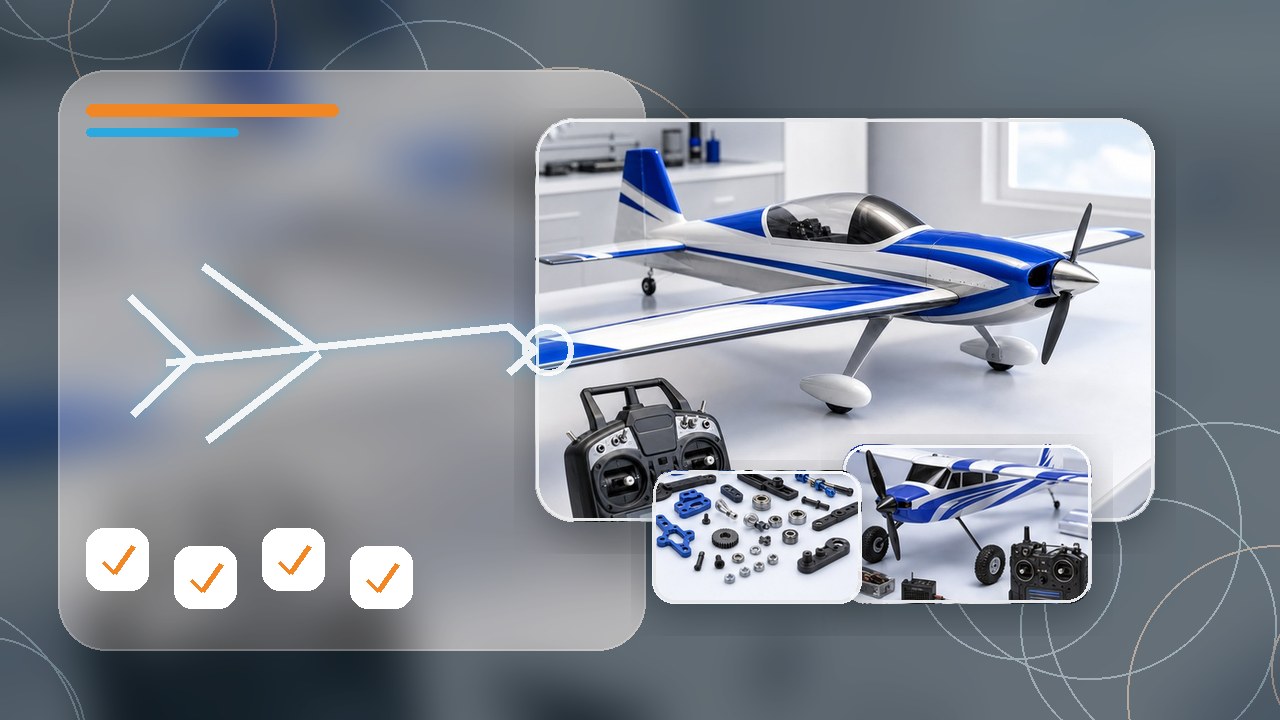
Dual Rates and Expo should fine tune a mechanically correct aircraft. Servo arms, control horns and linkages should already move freely and reach the recommended control throws.
If the surface is binding or the linkage geometry is poor, radio settings will only hide the problem. Fix mechanics before changing numbers in the transmitter.
Use low rates for calm first flights
Low rate reduces maximum control movement and makes the aircraft less sensitive. For first flights, begin near the manual recommendation for beginner or low-rate throws.
High rate can be kept on a switch for stronger control authority, but a new pilot should know exactly which switch position is low rate before takeoff.
Expo changes feel around center
Expo softens stick response near center while keeping full throw available at the ends. Moderate expo can make a trainer or sport aircraft feel smoother without making it sluggish.
Too much expo can make the aircraft feel disconnected, then suddenly aggressive near full stick. Start modestly and adjust after a safe test flight.
Rates and expo checklist
- Mechanical throw checked first
- Low-rate switch position known
- High-rate switch position known
- Elevator, aileron and rudder rates set separately
- Expo set moderately
- Control direction checked after programming
- First flight starts on low rates
Common questions
Should beginners use expo?
Moderate expo can help beginners by softening center-stick response, but it does not replace a stable trainer or correct mechanical setup.
What is the difference between Dual Rates and Expo?
Dual Rates limit maximum control movement. Expo changes how sensitive the stick feels around center.
Can too much expo be bad?
Yes. Excessive expo can make the model feel unresponsive near center and too sudden near full stick.
Relevant products from the catalog
Use these links as the practical buying path after reading the guide: aircraft, power system parts, tools and spares that usually complete the setup.