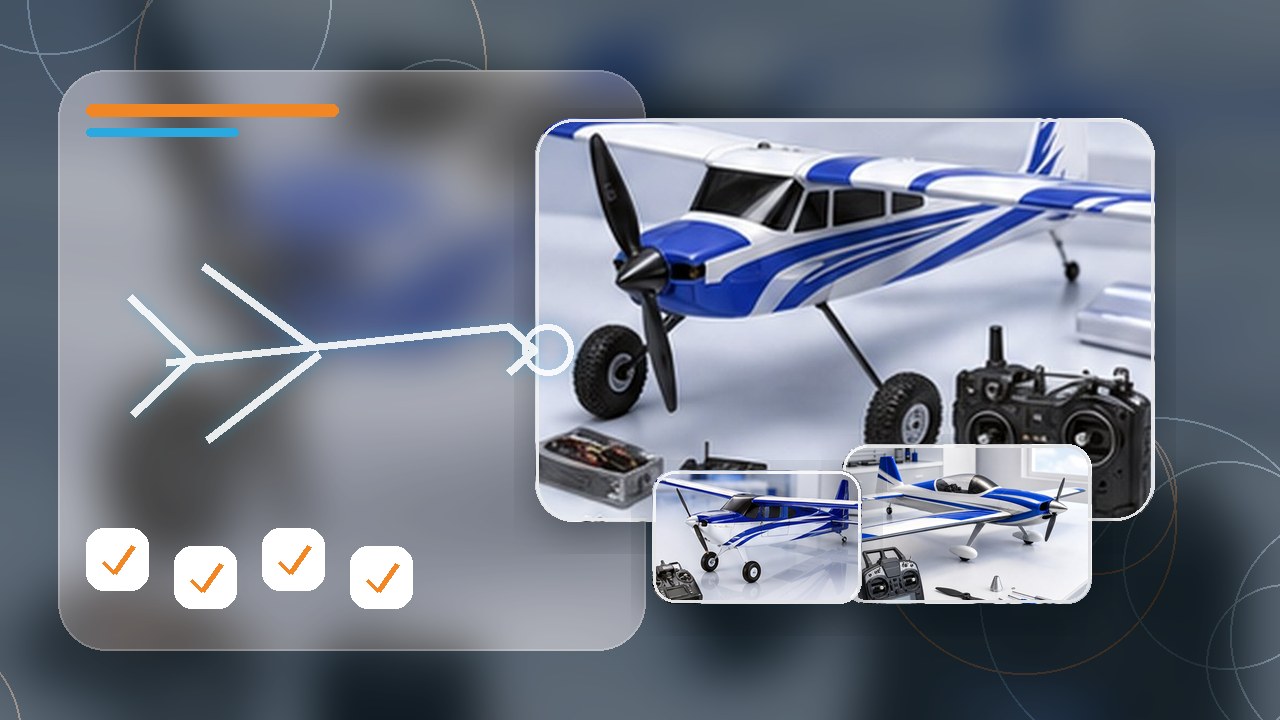
5 recommended RC aircraft paths for beginners
Five practical first-aircraft buying paths, with product-search links that help customers move from learning to choosing models in the catalog.
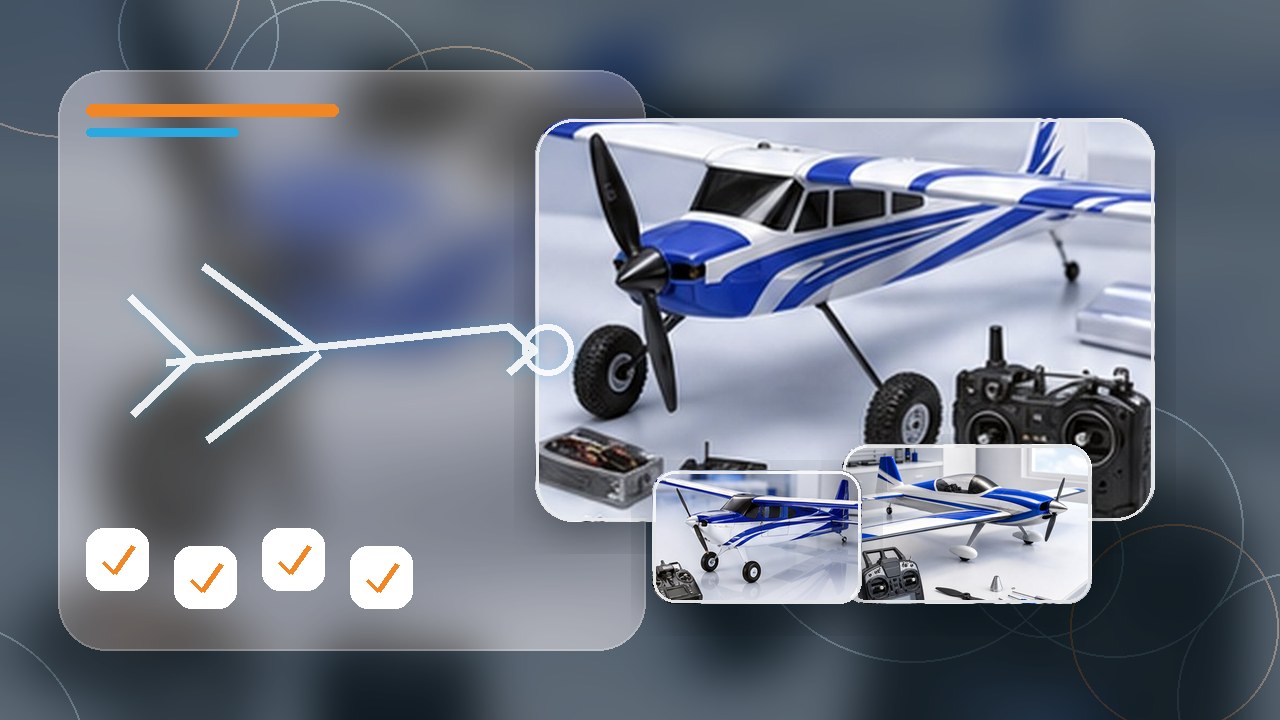
How to use these recommendations
The best first aircraft depends on the customer, not only on the model photo. Field size, wind, access to instruction, transport space and repair confidence matter as much as wingspan or motor size.
Use the five paths below as buying directions. Each path points to a type of product in the store and the accessories that normally need to be selected at the same time.
Do not buy the aircraft alone
A beginner purchase should include the aircraft, compatible radio gear if needed, battery, charger, spare propellers, a battery checker, glue and a few tools. A model with missing support items quickly becomes a service problem.
When comparing two starter models, prefer the one with clearer setup information, available spare parts and a recommended battery path.
Match the recommendation to the pilot
A cautious beginner usually does best with a high-wing trainer or stable foam trainer. A patient pilot with open space may enjoy an electric glider. Someone with experienced help may start with a gentle sport model or ARF trainer.
Fast Warbirds, EDF jets and aggressive 3D aircraft should stay for later, after orientation, takeoff and landing are consistent.
Five beginner-friendly buying paths
These are practical catalog directions, not fixed prices. Use the product-search buttons on this page to find the current matching products.
| Path | Best for | Why it works | Buy together |
|---|---|---|---|
| High-wing trainer | Most first-time pilots | Stable, visible, slower reactions and easier landing practice | Battery, charger, spare propellers, receiver or radio package |
| Foam electric trainer | Customers who want simple repairs | Light, practical, often easier to repair after small mistakes | Foam-safe glue, battery checker, spare propeller |
| Electric glider | Patient pilots with open space | Longer practice time and smoother flying habits | Folding propeller parts, suitable battery, charger, wing servos if needed |
| Slow sport aircraft | Beginners with instructor support | Can grow with the pilot while still staying calm | Radio system, low-rate setup, spare propellers |
| ARF trainer | Customers who want to learn building | Teaches assembly and component matching from the start | Servos, receiver, motor or engine, adhesives, tools |
Before recommending a beginner aircraft
- Confirm where the customer will fly
- Ask if an instructor or club helper is available
- Avoid fast scale, EDF and 3D aircraft for solo beginners
- Check battery and charger requirements
- Check spare propellers and repair parts
- Confirm transmitter and receiver compatibility
- Add glue, tools and battery checker to the first order
Common questions
Can there be one best beginner aircraft for everyone?
No. The safest recommendation depends on field size, wind, repair confidence, available instruction and how much setup help the customer has.
Why not recommend an EDF jet if the customer likes jets?
EDF jets are fast and power hungry. A trainer first usually protects the customer budget and builds the skills needed for a jet later.
Should beginners buy spare parts with the model?
Yes. Spare propellers, glue and a battery checker are low-cost items that keep the customer flying after normal learning mistakes.
Relevant products from the catalog
Use these links as the practical buying path after reading the guide: aircraft, power system parts, tools and spares that usually complete the setup.