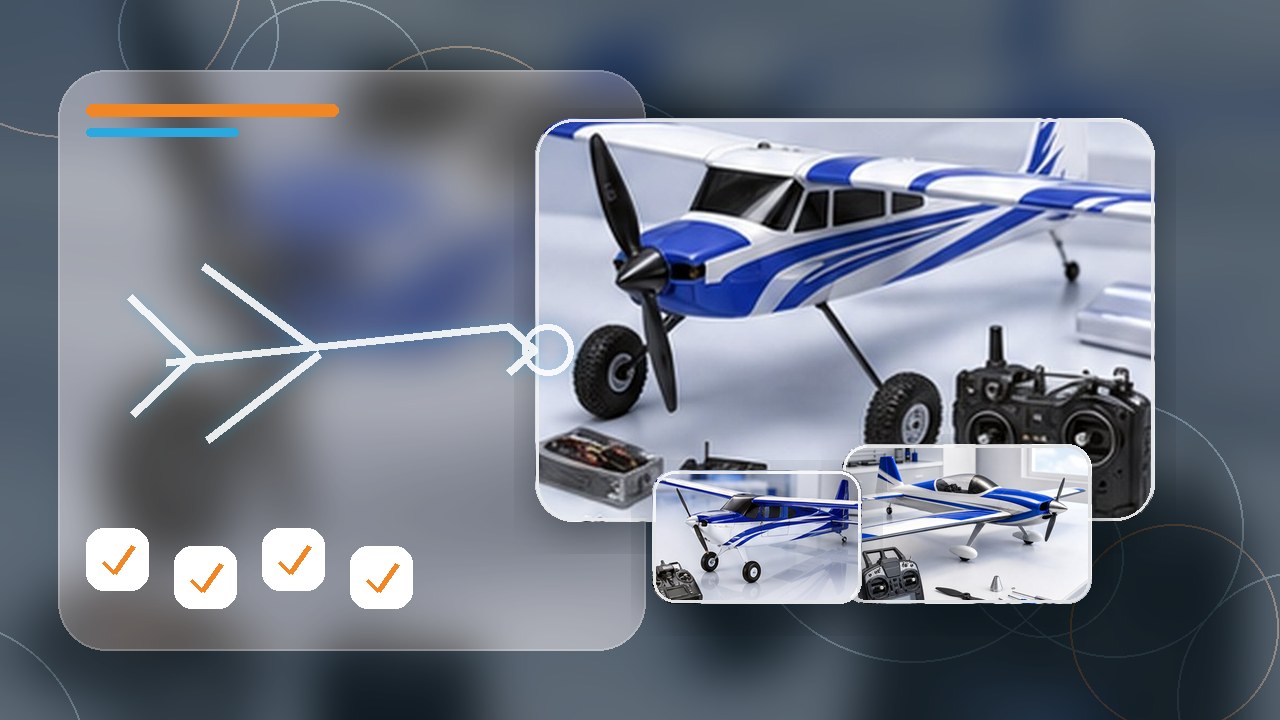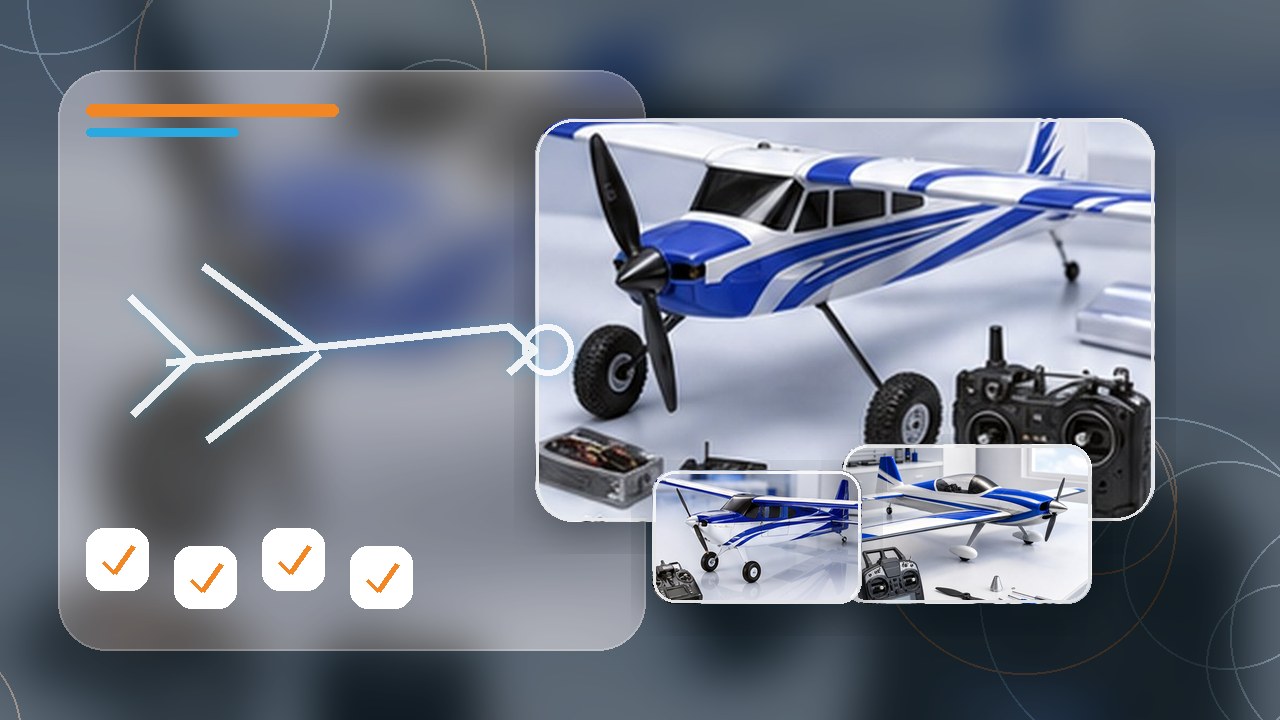
Recommended LiPo batteries by RC aircraft type
A buying guide that helps customers choose battery cell count, capacity, C rating, connector and charger direction by model type.
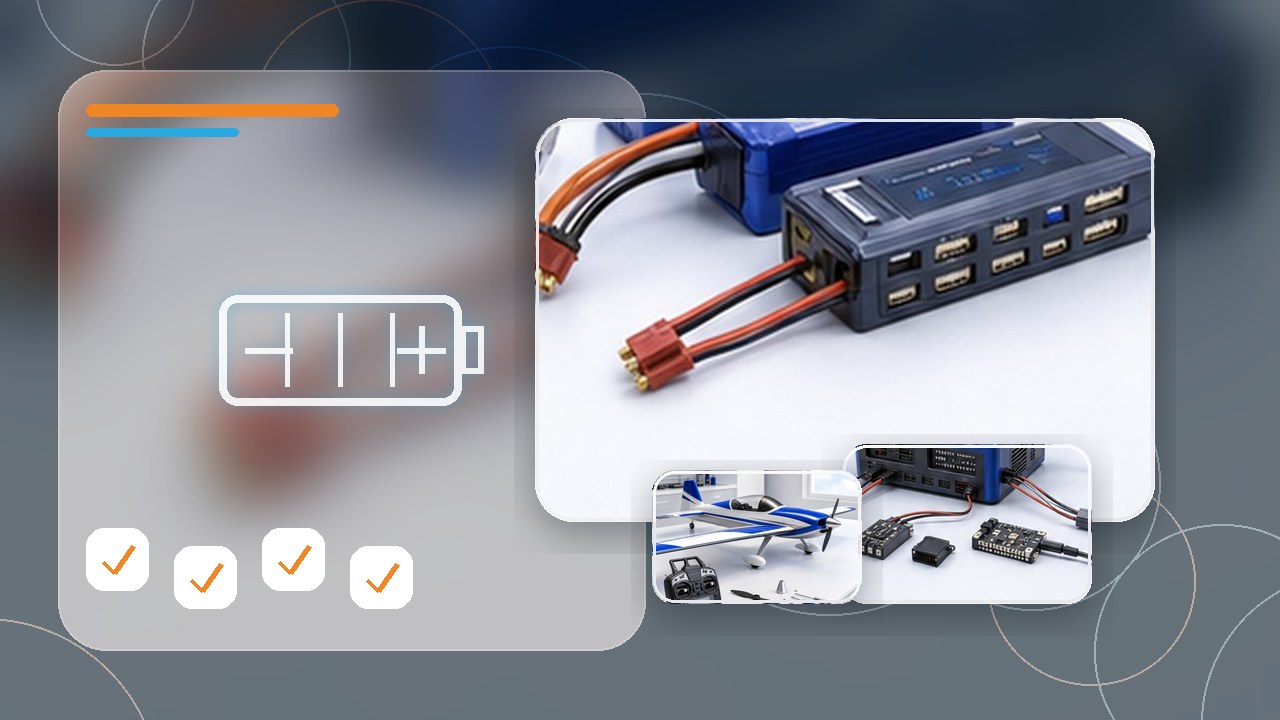
Battery choice changes the aircraft
A battery is not only a fuel tank. Cell count changes voltage, capacity changes weight and flight time, C rating affects current delivery and physical size affects CG.
The correct recommendation always starts with the aircraft manual, motor, ESC and propeller. The table below is a practical direction, not a replacement for the exact model specification.
Do not chase maximum capacity blindly
A larger mAh number can increase flight time, but extra weight can raise landing speed, hurt climb, move CG forward and make the model feel heavy.
For many customers, two or three correctly sized packs are better than one oversized pack.
Charger and connector are part of the sale
Every battery recommendation should include charger compatibility, balance charging, connector type, storage voltage and safe transport. A customer who cannot charge correctly cannot use the battery safely.
If the aircraft uses high current, connector quality and battery C rating must be treated as performance and safety items.
Battery direction by aircraft type
Use this as a sales conversation guide, then confirm the exact model requirements before the final recommendation.
| Aircraft type | Battery direction | Main check | Buy together |
|---|---|---|---|
| Trainer | Moderate 3S or 4S packs commonly suit many electric trainers | Correct CG and connector type | Charger, spare pack, battery checker |
| Electric glider | Pack sized for climb and CG, often lighter than maximum capacity | Battery tray fit and folding-prop current | Charger, telemetry or voltage checker |
| Sport / aerobatic | Higher discharge pack matched to motor and propeller | Current draw and ESC headroom | Connector, watt meter, spare propeller |
| 3D aircraft | High-current pack with weight kept under control | Voltage sag during aggressive throttle use | High-quality connector, strap, charger |
| EDF jet | Strong pack with high C rating and good cooling | Current draw, heat and flight time | Charger, telemetry, parallel-safe charging plan if used |
| Giant Scale electric | Large series packs or high-capacity setup only when the airframe supports it | Power distribution, arming safety and transport | High-power charger, safety storage, connectors |
Battery recommendation checklist
- Start from aircraft manual
- Confirm motor and ESC cell-count limits
- Check physical battery tray size
- Set CG with battery installed
- Match connector current rating
- Choose realistic C rating
- Confirm charger supports cell count and current
- Explain storage voltage and safe transport
Common questions
Can a customer use any battery with the same voltage?
No. Size, weight, C rating, connector and CG all matter. Same voltage does not mean same suitability.
Should a beginner buy more than one battery?
Usually yes, if budget allows. Multiple correctly sized packs create more practice time without forcing an oversized battery into the model.
What is the safest charging habit to teach?
Balance charge on the correct LiPo setting, use proper charge current, inspect packs and store them at storage voltage when not flying.
Relevant products from the catalog
Use these links as the practical buying path after reading the guide: aircraft, power system parts, tools and spares that usually complete the setup.