How to store RC aircraft and batteries correctly
Storage habits for expensive RC equipment: aircraft support, humidity, dust, battery storage voltage, connectors and long-term readiness.
Store the aircraft without stressing the structure
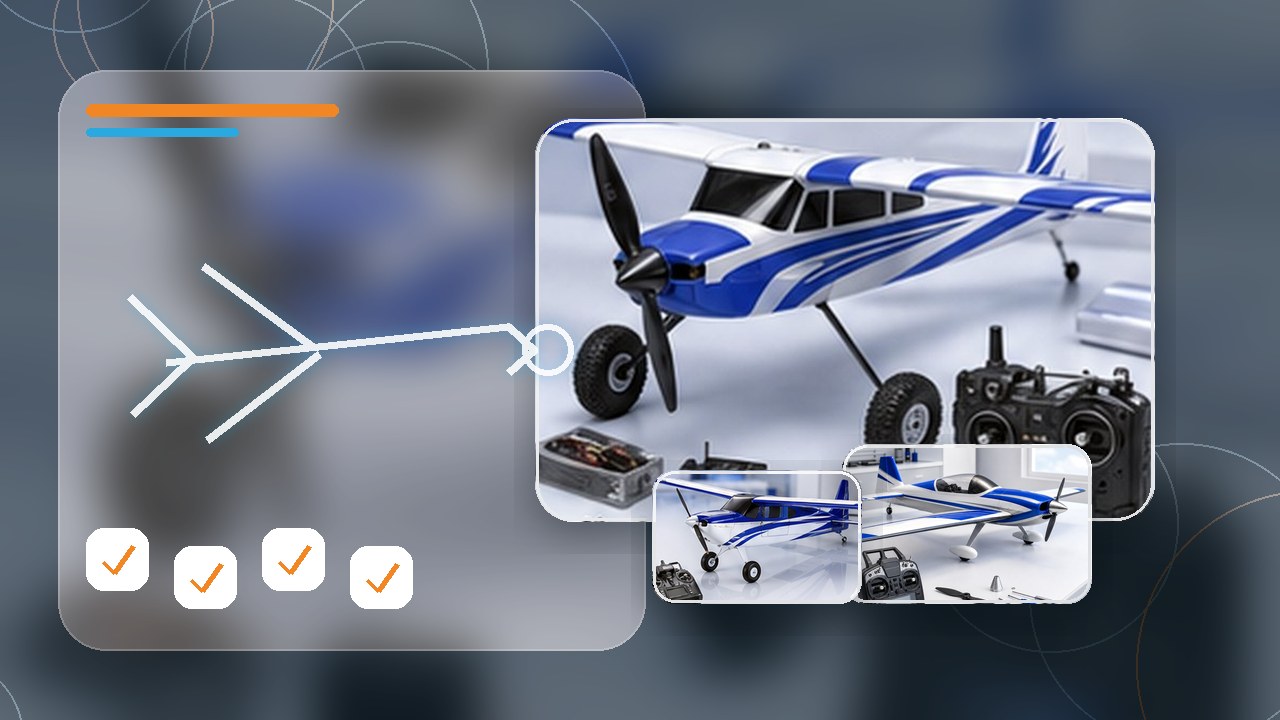
Large models should be supported so wings, tail surfaces and landing gear are not under constant stress. Avoid leaving a model pressed against a wall where covering, foam or control surfaces can deform.
Remove dirt and fuel residue before storage. Keep the model away from direct sun, high heat, high humidity and places where tools or boxes can fall on it.
Batteries need their own routine
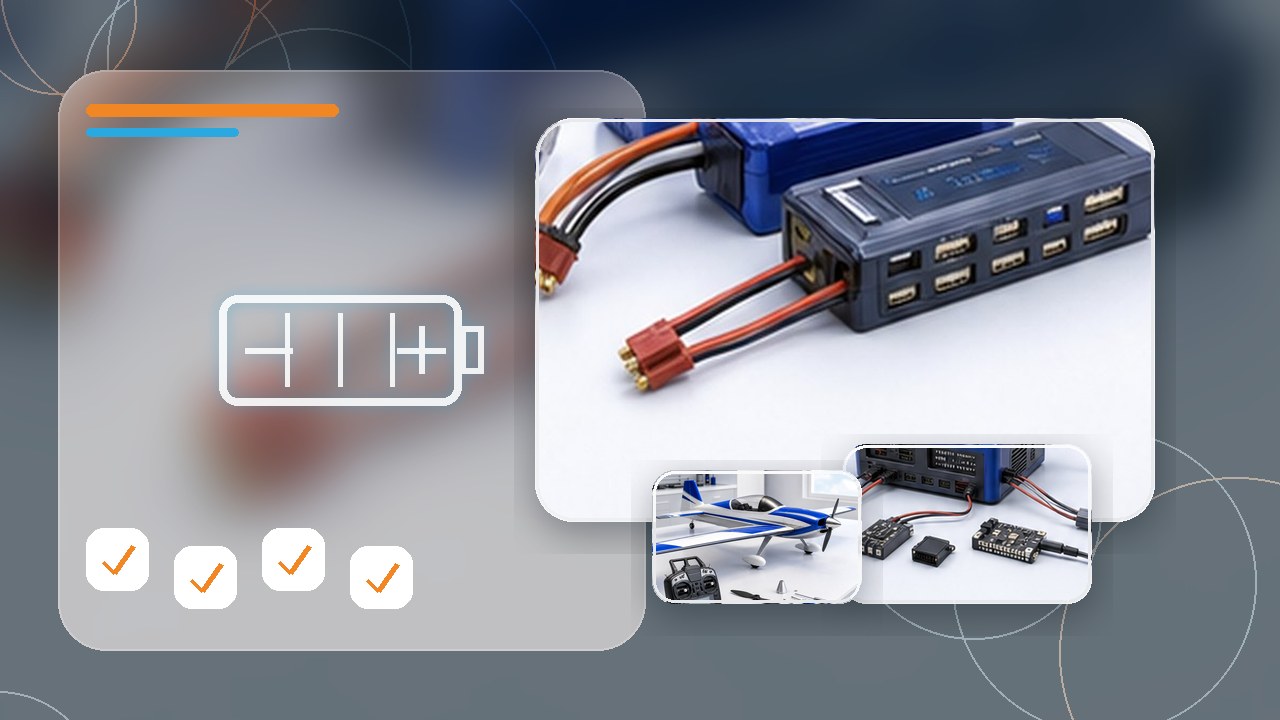
LiPo packs should be stored at storage voltage, disconnected from the model and away from flammable materials. Battery leads should not be able to short against tools or metal parts.
Label packs by age or usage when possible. Packs that sit unused for months should be checked periodically for voltage, swelling, damaged wires and connector condition.
Electronics and hardware age better when protected
Receivers, servos, switches, connectors and metal hardware should be protected from moisture and corrosion. Dust can also hide damage and affect cooling.
Before returning a stored model to flight, repeat the full pre-flight routine instead of assuming it is still ready.
Storage checklist
- Airframe cleaned before storage
- Wings and tail supported safely
- Model kept away from heat and direct sun
- Batteries disconnected from model
- LiPo packs stored at storage voltage
- Connectors protected from shorts
- Humidity and corrosion risk reduced
- Full pre-flight planned after long storage
Common questions
Can I store a LiPo fully charged?
Short-term before flying may be acceptable, but long-term full storage is bad for pack life and increases risk. Use storage voltage for longer storage.
Should batteries stay inside the aircraft?
No. Store batteries disconnected and separate from the model so they can be inspected and cannot power anything accidentally.
What damages stored aircraft?
Heat, sunlight, humidity, dust, pressure on control surfaces, fuel residue and forgotten loose batteries are common causes of storage damage.
Relevant products from the catalog
Use these links as the practical buying path after reading the guide: aircraft, power system parts, tools and spares that usually complete the setup.